 Cryptiq
MetaMask Yanks Ethereum Validators After Tiny Theft Raises Big Questions
Security·October 2, 2026
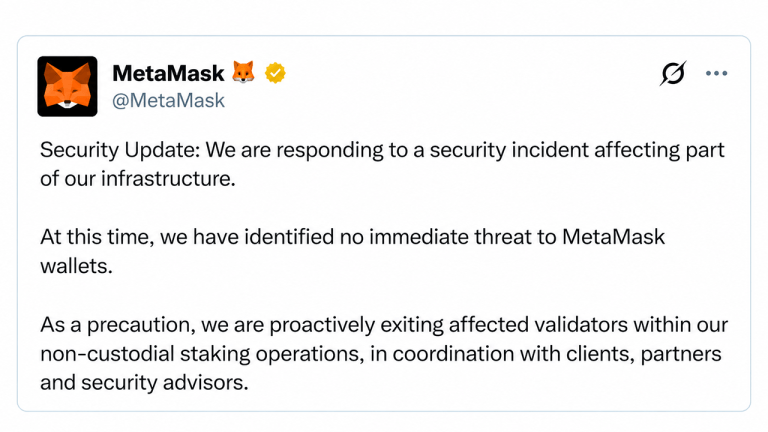
MetaMask has started pulling its Ethereum validators out of service after a security incident that, by early accounts, siphoned off less than $1,000 worth of block tips. The amount is trivial. The response is not.
Outside researchers tracking the exits estimate that roughly 17,000 validators, together holding about 523,000 ETH, were sent toward the exit queue. That is a large slice of staked capital to move over a loss that would barely register on a trading desk, which suggests the team treated the breach as a warning about something deeper than the stolen tips.
MetaMask says its wallets and customer funds show no signs of being affected. The company has not framed the episode as a user-facing loss, and nothing in the available details points to anyone's personal holdings being touched. The diverted funds appear to have come from block tips, the priority fees validators collect for including transactions, rather than from staked principal.
So why the dramatic step? Pulling validators is a conservative move. If an attacker was able to redirect fee payments, the worry is that they may have had access to something tied to validator operations, such as configuration, withdrawal or fee-recipient settings, or the infrastructure that runs the nodes. Exiting the validators removes that exposure while the team works out what happened and whether the same weakness could be used for something costlier.
The real bill may come from the cleanup rather than the theft. Exiting validators means downtime, and downtime means missed rewards. Stakers do not earn while they wait in the exit queue or while keys and infrastructure are rebuilt, and re-entering the validator set can take time depending on queue conditions. Multiplied across 17,000 validators, even a modest daily yield adds up to a meaningful opportunity cost.
There is also a reputational angle. MetaMask is among the most widely used entry points to Ethereum, and its staking operation is closely watched. A small incident handled with a large, visible response can reassure the market that the team is erring on the side of caution, but it can also raise questions about how the breach happened in the first place and how much control an attacker briefly had.
For now, the key facts are narrow. The confirmed loss is under $1,000, user funds are reported safe, and the validator withdrawals are a precaution. What remains unclear is the root cause, whether the exits will be reversed, and how long the affected stake will sit idle. Those answers will decide whether this ends up as a footnote or a case study in how a tiny leak can force a very big shutdown.
Reporting based on an external source.